Women Who Did Art Installations With the Latex Paint
Asked to summarize her artistic ambitions in the 1960s, Lynda Benglis replied, "I wasn't breaking away from painting but trying to redefine what it was."1 She was raised in Louisiana and moved to New York in 1964, where she trained as a painter in the Abstruse Expressionist vein. Benglis admired the gestural style of that older generation of artists, only quickly began to adapt their methods to more extravagant ends. Employing a wide range of materials in acid hues, her all-time-known works record the behavior of a fluid substance in action. Alongside peers like Eva Hesse, Alan Saret, and Richard Serra, she immune the process of making to dictate the shape of her finished works, wielding pliant matter that "can and will take its own grade."2
Benglis invented a new format with her celebrated "pours," which resembled paintings simply came off the wall to occupy the space of sculpture. In Blatt and other similar works from 1969, she extended Jackson Pollock's famed drip technique into 3 dimensions, spilling liquid condom directly onto the flooring. (A photographer for Life magazine once captured Benglis in mid-pour, lunging forward to sling pigmented latex straight from the can.) Blatt's dayglo swirls retain a wait of barely arrested motion, their colors gelled into a kind of psychedelic carpeting. Rejecting vertical orientation—every bit well as canvass, stretcher, and brush—the "pours" push conventions of easel painting to the indicate of near collapse.
Another viscous textile is tested in Benglis's wax reliefs of the late 1960s. In Embryo 2 (1967), layers of molten beeswax cling to a Masonite board, hardened into ridges and furrows in a spectrum of pastel hues. This pursuit of what the artist called "the frozen gesture" continues in her fabric knots—silvered coils of cotton bunting wrapped around a wire armature.3 Victor (1974) gleams with metal paint, and other knots in the serial are flecked with glitter and bright acrylic. That corrective finish—all spangle and flash—recalls the decorative arts, and mars pure abstraction with jarring materials that connote the lowbrow and the feminine.
Benglis's interest in gendered stereotypes extends to her pioneering videos. Works like Female Sensibility and At present (1973) play freely with arousal and submission, and questioned the role of the woman artist at the height of the feminist move. More than provocative still were the racy self-portraits she staged in the early 1970s: advertisements and gallery announcements in which she posed like a pinup or porn star. These "sexual mockeries," as Benglis called them, satirized "the art-star system, and the fashion artists utilise themselves, their persona, to sell the piece of work."iv
Introduction past Taylor Walsh, Curatorial Assistant, Department of Drawings and Prints, 2016
The inquiry for this text was supported by a generous grant from The Mod Women's Fund.
- Introduction
- Lynda Benglis (born October 25, 1941) is an American sculptor and visual creative person known especially for her wax paintings and poured latex sculptures. She maintains residences in New York City, Santa Atomic number 26, New United mexican states, Kastellorizo, Greece, and Ahmedabad, India.
- Wikidata
- Q538986
- Nationality
- American
- Gender
- Female
- Roles
- Artist, Teacher, Painter, Performance Artist, Photographer, Sculptor, Video Artist
- Names
- Lynda Benglis, Linda Bengalis
- Ulan
- 500092195
Information from Getty'southward Union List of Artist Names ® (ULAN), made available under the ODC Attribution License
xviii works online
-
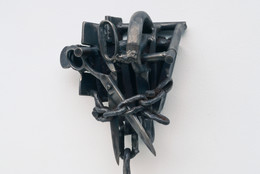
400: New Monuments
Ongoing
Collection gallery
MoMA
-
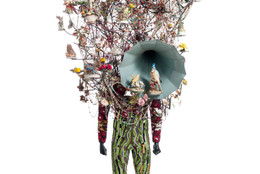
Studio Visit: Selected Gifts from Agnes Gund
Apr 29–Jul 22, 2018
MoMA
-
The Long Run
November 11, 2017–May 5, 2019
MoMA
-
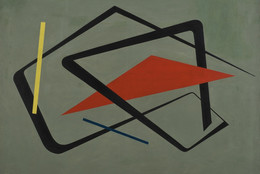
Making Space: Women Artists and Postwar Abstraction
April xv–Aug 13, 2017
MoMA
-
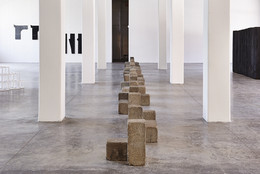
FORTY
Jun nineteen–Aug 28, 2016
MoMA PS1
-
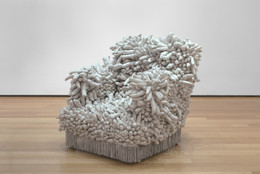
From the Drove:
1960–1969 Mar 26, 2016–Mar 19, 2017
MoMA
-
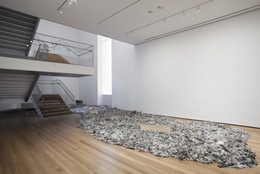
Painting and Sculpture Changes 2013
Jan ane–Dec 31, 2013
MoMA
-
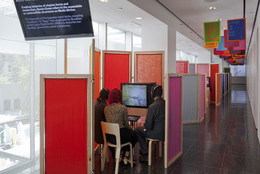
MoMA Media Lounge
February 29, 2012–Jul 8, 2013
MoMA
-
MoMA Highlights: 375 Works from The Museum of Mod Art Flexibound, 408 pages
-
MoMA Now: Highlights from The Museum of Mod Art—Ninetieth Anniversary Edition Hardcover, 424 pages
If yous would like to reproduce an image of a work of art in MoMA's drove, or an prototype of a MoMA publication or archival material (including installation views, checklists, and printing releases), please contact Fine art Resource (publication in North America) or Scala Archives (publication in all other geographic locations).
MoMA licenses archival audio and select out of copyright film clips from our film drove. At this time, MoMA produced video cannot be licensed by MoMA/Scala. All requests to license archival sound or out of copyright film clips should be addressed to Scala Archives at [e-mail protected]. Movement picture motion picture stills cannot exist licensed by MoMA/Scala. For admission to motion picture film stills for enquiry purposes, please contact the Film Study Center at [email protected]. For more than data most motion picture loans and our Circulating Picture and Video Library, please visit https://world wide web.moma.org/inquiry-and-learning/circulating-picture show.
If you would similar to reproduce text from a MoMA publication, delight email [email protected]. If you would like to publish text from MoMA's archival materials, please make full out this permission form and send to [email protected].
This record is a work in progress. If you lot accept additional information or spotted an mistake, please send feedback to [e-mail protected].
Source: https://www.moma.org/artists/471

Post a Comment for "Women Who Did Art Installations With the Latex Paint"